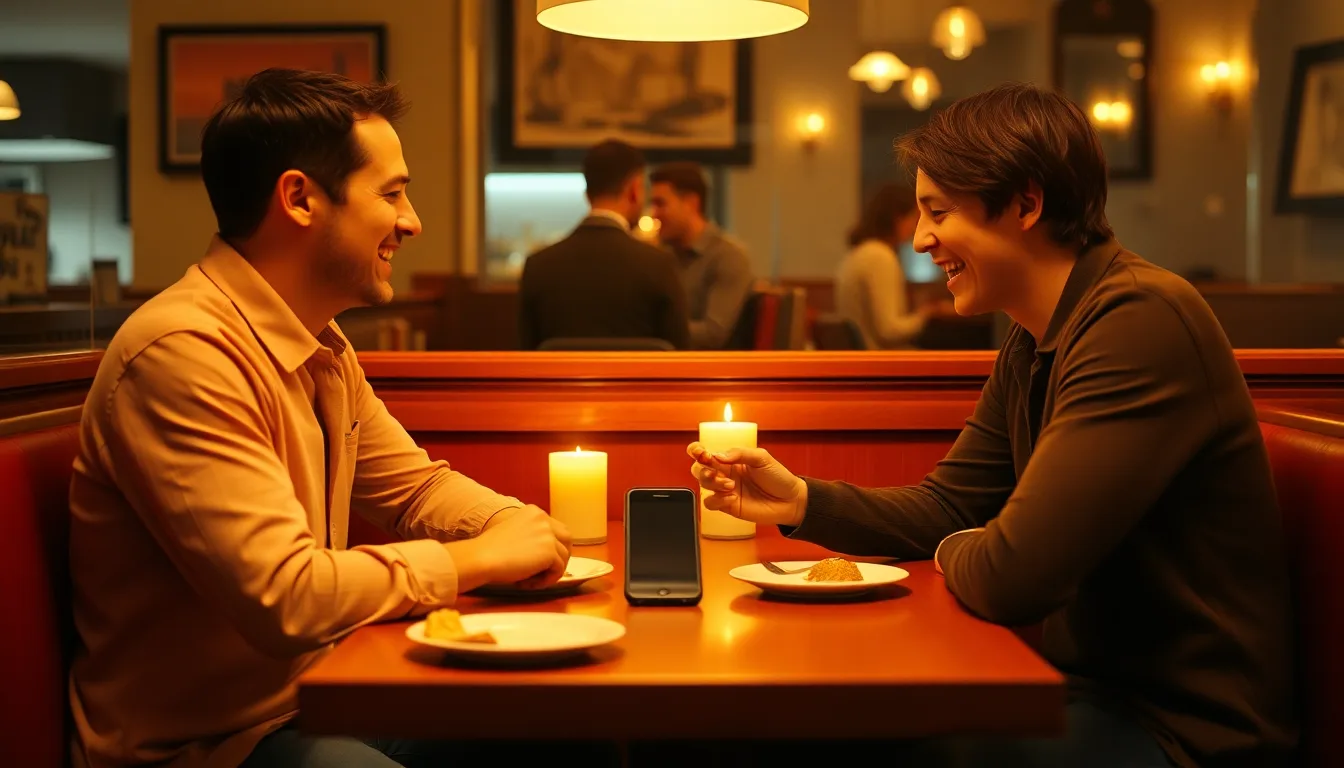

Studies on self-disclosure have a word for the thing you already know from experience: rapid intimacy. Thirty minutes on a train with a stranger in Georgia can feel more open and honest than a year of office small talk. Four nights of sharing a hostel kitchen can create a bond it would normally take six months of shared gym visits at home to build.
This is not a trick of the mood. There is a real mechanism behind it. And if you're meeting people on a trip — for friendship, for dating, for anything — it's worth understanding what's happening so you can use it well, and not get burned by it.
Why it happens
Four forces, stacked on top of each other:
1. No shared future
When two strangers meet on a trip, most of the social theatre we perform at home disappears. You don't have to manage ongoing reputation. You're not worried about what they'll say to your coworkers. You can say a real thing about your parents, your job, your fears, because this person is not going to be at the next office party. That radical absence of audience does enormous work.
2. Displacement from your usual identity
Travel strips you of a surprising amount of your home context. No one here knows what car you drive, what your apartment looks like, how your last relationship ended. You show up as a minimum viable version of yourself. And the other person is also a minimum viable version of themselves. You meet as personalities first, rather than as resumes.
3. Shared logistics
A surprising amount of connection happens through shared, low-stakes problem-solving: figuring out which bus to take, deciding what to order, navigating an unfamiliar market. Cooperating on tiny logistics is a fast track to liking someone. It skips hundreds of hours of “getting to know you” conversation.
4. Heightened sensory environment
On a trip, your brain is slightly on. Different food, different light, different sounds, different weather. That heightened state lowers the threshold for emotional openness. It also, incidentally, makes people more attractive than they would otherwise be under fluorescent office light.
None of those four effects are fake. All of them are also temporary.
Why it also messes people up
The flip side of rapid intimacy is distortion. The same forces that make a train conversation feel profound also make it harder to assess a person accurately.
Common misreadings:
- Mistaking shared novelty for shared values
- Mistaking absence of daily friction for compatibility
- Mistaking a good conversation for a deep understanding
- Mistaking the setting for the person
I've watched travellers fly across the world to visit someone they spent three intense nights with in Bali, only to discover they didn't actually know each other. The intensity was real. The knowing was not.
How to use the energy, without being fooled by it
The goal isn't to suppress rapid intimacy. It's useful. It creates faster, truer conversations than you would have at home. The goal is to channel it and sanity-check it.
Let the first hour be real
When you find yourself in one of these fast-intimacy moments, don't retreat into polite small talk out of self-protection. You will probably never see this person again, or you will see them exactly as often as you both choose to. Lean into the real questions. Ask what they were doing this time last year. Ask what they miss about their old city. These are good questions and travellers answer them honestly.
Mark the transition
About sixty or ninety minutes in, there is a moment when you can feel the conversation wanting to go deeper. Maybe you've had a second drink. Maybe the bus is still four hours from arriving. Notice that moment. You don't have to decide anything — just acknowledge to yourself, silently, that the next hour is optional and important.
A lot of the regrets that come out of travel intimacy come from sliding past this moment without noticing it.
Don't promise what you can't deliver
The most common travel-intimacy mistake is the promise. “I'll come visit you in Melbourne.” “We'll do this again next year.” “I'll be in your city in September.” Some of these come true. Most do not, and the person on the receiving end is left to absorb the quiet disappointment.
Better: say what's true in the moment, specifically. “This has been a great afternoon.” “I'll remember this conversation.” “If I end up in your city I'll let you know, but I don't want to promise something I'm not sure about.”
That third sentence is unusually attractive because almost nobody says it.
Travel intimacy is honest when it describes the present. It gets in trouble when it tries to describe the future.
Using the energy romantically
If this fast intimacy starts to edge into romance, a few tools help.
Ask where they actually live on a Tuesday
I mean this literally. “What does your normal Tuesday look like?” pulls the conversation out of travel mode and into real mode. The way they answer is instructive. Some people can paint their Tuesday vividly; others cannot, because their Tuesdays are not the life they want to talk about. Either answer is useful.
Take one deliberately ordinary walk
If the romance accelerates quickly, insert one boring activity into the trip. A grocery run. A post office. A laundromat. The moment you both admit you are doing something unromantic, you find out whether you still like each other.
Wait two weeks before booking a second visit
If they are in another country and the trip is ending, resist the urge to book a return flight from the airport. Wait until you have both been home for two weeks, living your normal lives. If the connection survives a fortnight of normal, it is probably worth a visit. If it wilts in that time, you saved yourself a plane ticket.
Using it for friendship, which is often the better outcome
Not every fast-intimacy travel connection wants to be romance. Most of the best ones, in my experience, are friendships that travel converts into years of loose, meaningful correspondence.
Practical ways to keep these alive:
- Send one message within 48 hours of parting, specific to something that happened
- Start a voice-note thread, not a back-and-forth chat. Voice notes survive longer.
- Tell them honestly when you'll next be in their part of the world, even if it's “probably next spring, but I'll tell you when I know”
- If you say you'll read the book they recommended, actually read it and send them a reaction. This is one of the highest-signal friendship moves there is.
The long view
The people you meet in rapid intimacy during travel become, over a decade, a surprisingly large portion of your close contacts. Not because every encounter turns into something lasting, but because the ones that do tend to be more honest at the core than the friendships you built through slow accumulation at home.
That is the quiet gift of the phenomenon. You are seen briefly by people who had no reason to invest in seeing you. When they reach out a year later because a song reminded them of a conversation on a ferry, you remember that you were, for a few hours, fully yourself.
Next time a stranger sits down across from you on a train and asks a real question, you have a choice. You already know which answer is more interesting.