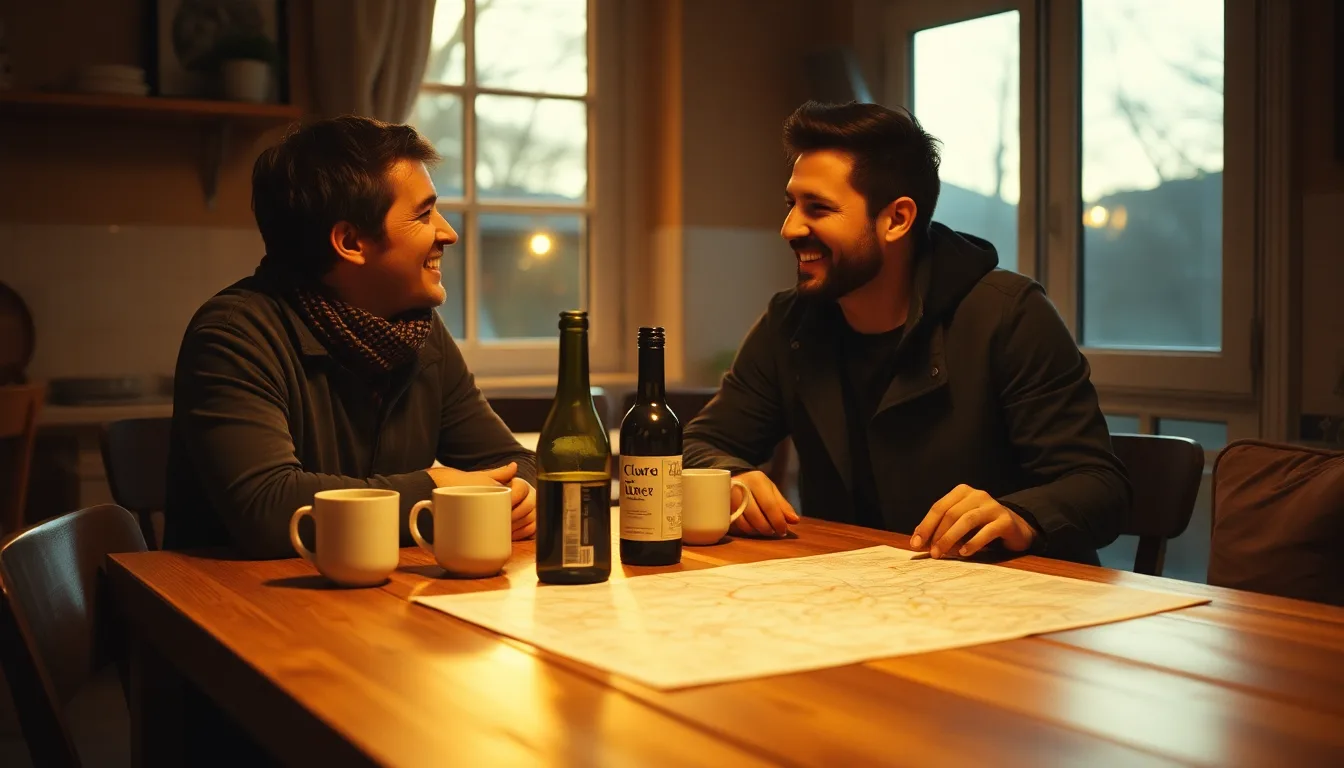
You are sitting in a small bistro in Palermo, Sicily. Your date's English is about thirty strong words and a smile. Your Italian is about the same, in reverse. The waiter has just poured the second glass of wine. You have two and a half hours until the restaurant wants the table back. You can already feel the conversational silence creeping toward you.
Here is how to turn that silence into a good first date instead of an awkward one. Not by studying phrasebooks. By redistributing the conversation off of words and onto the parts of communication that actually carry most of what anyone says.
The myth of words
Linguistics research suggests that a surprisingly small share of the meaning we transmit in person lives in the literal words. Much more lives in tone, cadence, eye contact, the way a hand lands on a table, what a person does with their weight when the waiter arrives, the rhythm of their laughter. On a language-barrier date, the words are doing less lifting than you think. You just need to stop treating words as the main event.
The pre-date prep that actually helps
Learn a specific 30-word vocabulary, not a generic one
Duolingo's greetings and numbers are not what you need. You need situational vocabulary for the exact kind of date you are planning. A list that works for a dinner date in most languages:
- The names of five foods you like and five you dislike.
- "This is delicious" and "this is too spicy."
- Three adjectives for how you are feeling tonight.
- "Slow down, please" — the most useful phrase in any new language.
- "What does that word mean?" — your second most useful phrase.
- One compliment that is not about appearance.
- "What was your day like today?" — the question that generates the most usable answer.
Thirty words, twenty phrases. You can learn this on the plane.
Pick the venue to do work for you
A silent museum is worse than a lively market. A noisy club is worse than a warm bistro. The best language-barrier venue has two features: shared stimulus to comment on, and enough ambient activity that silence does not feel heavy.
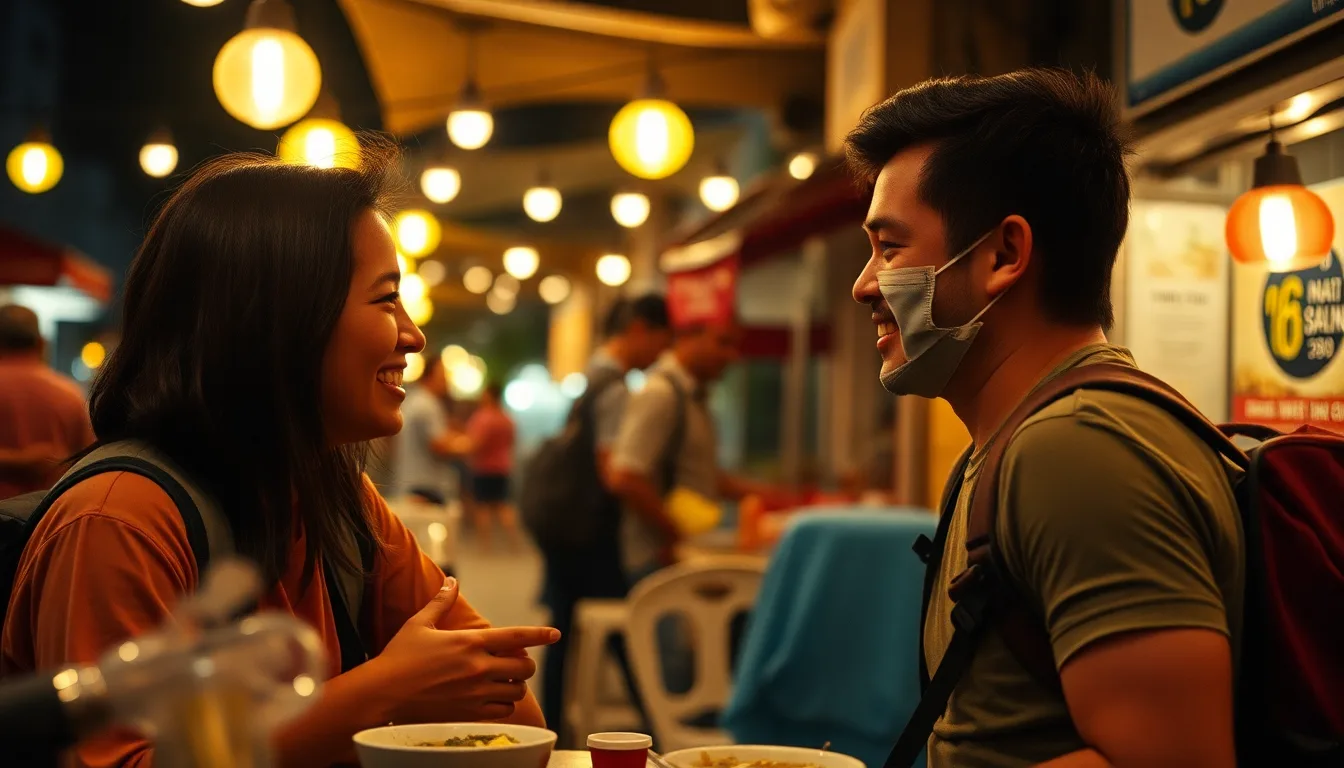
Good options: a food market you walk through together, a small live music bar, a neighborhood trattoria with a view of the street, an ice rink or bowling alley, a small museum followed by coffee. Bad options: a quiet upscale restaurant where every pause echoes, a movie (you cannot talk at all), a long drive (no shared visual cues).
The body language that does the work
Orient your whole body, not just your face
Across most cultures, squaring your body toward someone reads as interest, while facing slightly away reads as closed. On a language-barrier date, this matters more than usual — they are reading your orientation harder than they would on a fluent date. Angle your chair, your shoulders, and your feet toward them.
Mirror, slowly
If they lean in, lean in after a beat. If they gesture with their hands while telling a story, let your hands loosen. Mirroring is not mockery — it is rapport. Everyone does it subconsciously with people they like. Doing it consciously, gently, on a language-barrier date amplifies the signal.
Eye contact is a language of its own
Cultural norms around eye contact vary. Southern European, Latin American, and Middle Eastern dating contexts generally tolerate and reward longer, softer eye contact. Many East Asian contexts reward more periodic, breaking-away eye contact. Observe what they do for the first twenty minutes and calibrate to match. Holding eye contact one beat longer than they do, occasionally, is a flirtation signal in almost every culture.
Touch is the earliest diagnostic
A light, brief touch on the forearm during a laugh, or a hand near theirs on the table while you gesture, is a low-cost test. Watch what they do after. If they stay close or mirror with a touch of their own, the temperature is rising. If they pull back subtly, back off and stay warm but not physical. This is universal across cultures; only the calibration varies.
The shared-activity conversational hack
Conversation gets heavy when both people are staring at each other across a table trying to manufacture words. Reintroduce an activity into the middle of the date and the pressure drops by half.
- Order a shared plate in the middle. Bolognese ragu, ceviche, a cheese board, grilled squid. You now have five minutes of action and commentary without needing content.
- Walk between two venues. A first date split across two small places — drinks then dinner, or dinner then a dessert cafe — has a five-minute transition that resets conversation.
- Play a small game. Shared phone notes app in two languages. One of you writes a word. The other has to guess or describe it. This works better than it sounds and generates real laughter.
Phone translator etiquette
Pulling out a phone to translate in the middle of a date used to feel romantic. In 2026 it can feel clinical if overused. A few rules:
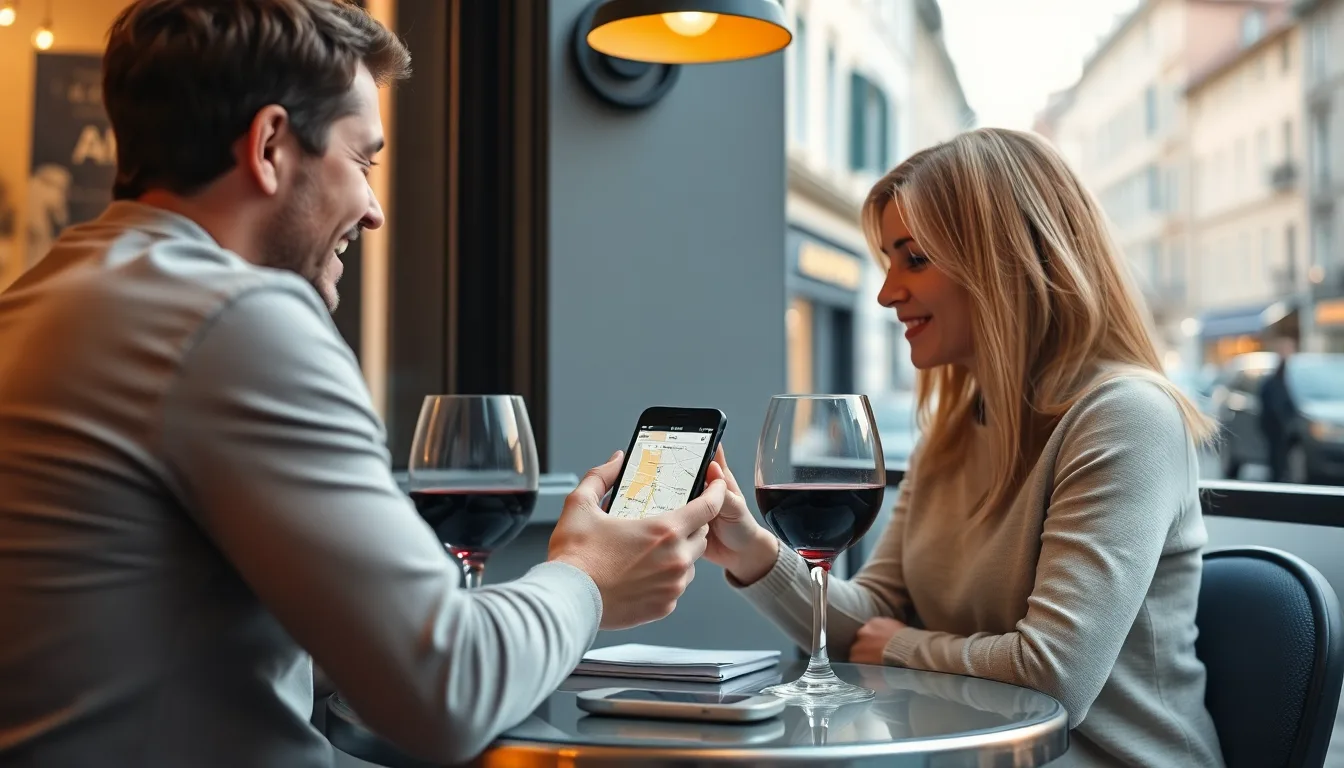
- Use the translator for specific nouns, not full conversations. Words for foods, a specific movie title, a neighborhood name. Not full sentences of feelings.
- Hand the phone over, do not read aloud. Letting them type or see the screen in their own language is more intimate and less parental.
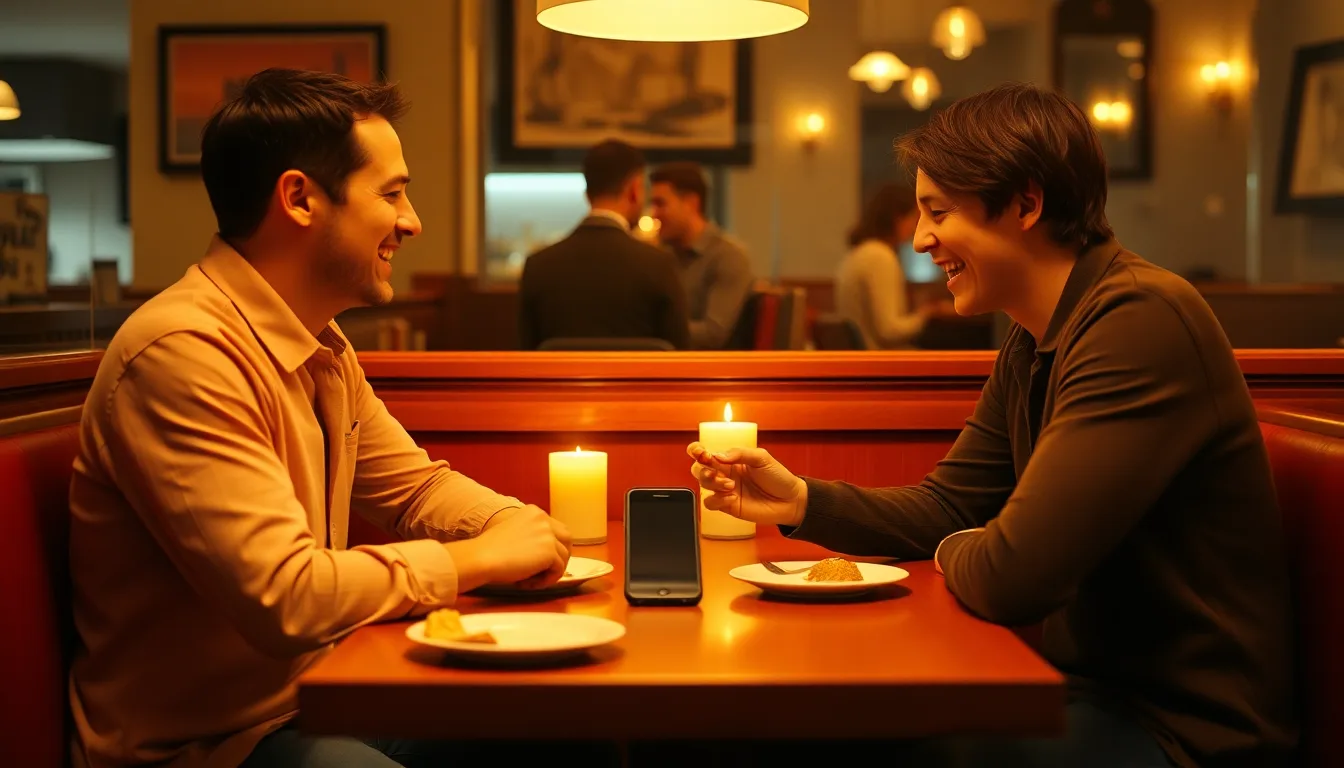
- Put the phone face-down between usages. On the table, not in your lap. The face-down gesture is read as "not more important than you" and reads well.
- Avoid voice-translation apps. Real-time voice translators can feel robotic in the middle of a date. Stick to text for short look-ups.
The pauses are not the enemy
Americans and some Northern Europeans are culturally uncomfortable with silence. On a language-barrier date, you will get more silence than normal, and fighting it makes it worse. Learn to sit in quiet beats with a small smile and warm posture. Many dating cultures — Japanese, Finnish, much of the Mediterranean — treat comfortable silence as a sign of intimacy, not awkwardness. Adopt this on purpose.
Reading the end-of-date moment
Without a shared language to negotiate "what happens next," the final five minutes become the most body-language-heavy part of the night. A few signals to watch:
- They linger at the exit. Yes, strong signal.
- They start paying for the taxi home, for one of you. In many cultures a quietly strong yes.
- They check their phone repeatedly as you say goodbye. Polite close, not an invitation to more.
- They ask where you are tomorrow or this weekend, in any broken way. Yes.
The goal on a language-barrier first date is not to be understood perfectly. It is to be felt clearly. Feelings travel across languages at full bandwidth. Use that.
One last thought
The language-barrier date has a quiet advantage most fluent dates do not. Because you cannot hide behind wit, you have to actually listen. You have to watch their face. You have to stay present. Many of the best romances people describe in their lives are ones that began in a language neither person fully spoke, and the reason is not exotic. It is that both people had to work at paying attention.
Borrow that, even when you share a language. The attention itself is most of the romance.