Here's a scenario nobody plans for. You're in Lisbon. You matched with someone, you went on a date, the date ended poorly — not dangerously, just badly — and the next morning you realise you don't want to stay in the Airbnb you booked for the week because it's two blocks from their flat. You want to rebook somewhere else for the next four nights. Your trip is effectively being re-routed by a dating situation.
Will your travel insurance cover any of it? Almost certainly not. Most standard travel insurance policies are written for a very specific set of emergencies: medical, lost luggage, missed flights. The actual failure modes that happen to travellers who date abroad are mostly invisible to the fine print.
This piece is a practical walkthrough of what policies typically do and don't cover, with a focus on the scenarios dating travellers actually face. Read the fine print of your own policy — this is a general guide, not a substitute for your document.
What most travel insurance policies actually cover
Before the gaps, here's the baseline you can usually count on with a mid-tier policy:
- Emergency medical treatment, including hospitalisation
- Medical evacuation, sometimes up to a capped amount
- Trip cancellation for a defined list of reasons (illness, death in family, natural disaster)
- Trip interruption under similar criteria
- Lost, stolen, or damaged luggage up to a per-item and total cap
- Missed connections caused by covered carrier delays
- Limited personal liability if you injure someone or damage property
This is a real and useful set of protections. It is also narrower than most people assume.
The gaps most dating travellers don't notice
1. Accommodation changes for safety reasons
If you have to leave your current accommodation because you no longer feel safe — for example, because a date has your address and you want to move — most policies will not reimburse the new booking. Insurers typically require a police report, and even then, the specific clause covering “stalking” or “harassment” is not standard. Check for language like “threatened safety,” “enforced relocation,” or “emergency accommodation.”
If these clauses don't appear in your policy document, assume the coverage does not exist.
2. Early return due to a personal safety incident
Trip interruption clauses usually list a narrow set of qualifying events — family death, serious illness, civil unrest. Returning home early because a date turned aggressive is almost never listed explicitly. A minority of more comprehensive policies have a broad “personal safety” clause, sometimes called an “optional bolt-on.” Worth asking your insurer.
3. Theft of items when you are with a new acquaintance
Most policies exclude items that were “left unattended” or stolen in circumstances where you invited someone into your accommodation. If your laptop disappears after a date, some insurers will reject the claim on the grounds that the theft wasn't forcible. Read the “forcible entry” clauses carefully.
4. Medical costs tied to substances
If you end up in a hospital and alcohol or drugs are in your system at the time — even in amounts that wouldn't be considered intoxication — some policies invoke a blanket exclusion and deny the claim. This is not a fringe clause; it's standard in several major insurers. Policies differ on whether they require specific thresholds or simply the presence of alcohol.
A quiet dinner with two glasses of wine, followed by a fall, can become an uninsured claim depending on your provider.
5. Medical costs at a destination not on your original itinerary
If you extended your trip or went somewhere your policy wasn't informed about, some insurers will argue the coverage ended at the last confirmed destination. If you've changed plans because of a romantic pivot — a spontaneous weekend in another country with a new connection — check that your policy is “multi-destination” or “worldwide within the insured period.”
6. Mental health emergencies abroad
Mental health coverage is uneven. Some policies exclude all mental health claims unless the condition was pre-existing and disclosed. Others will cover acute mental health emergencies, including a traumatic incident on a trip. This matters specifically for dating travellers: emotional crises after a frightening date are more common than people admit, and access to support abroad is harder to coordinate than at home.
Clauses worth looking for, by name
When reviewing a policy, search the document for these terms. If you cannot find them, ask the insurer directly before you buy:
- “Personal safety” or “assault cover”
- “Emergency accommodation”
- “Mental health emergency”
- “Trip disruption” beyond the standard trip interruption
- “24-hour multilingual support line”
- “Legal assistance overseas”
- “Female-specific cover” (some providers now offer it, particularly for solo travellers)
Having these clauses in writing matters more than having a famous insurer's logo on the policy.
The bolt-ons that are usually worth the extra money
If your baseline policy doesn't include the protections above, several insurers offer add-ons. The ones most often worth the additional cost for dating travellers:
- Trip cancellation for any reason (“CFAR”) — lets you recover a portion of costs regardless of reason
- 24-hour assistance hotline with translation — invaluable if you need to report something or navigate a foreign healthcare system
- Legal expenses cover — especially in countries where even minor incidents require legal help
- Identity theft cover — relevant if your wallet, phone, and ID go missing after a night out
The best travel insurance clause is the one you never use but can reach in forty minutes when you need it.
Things travel insurance will never cover, no matter the policy
Let's be honest about limits. These are structurally uninsurable and should be planned around, not insured against:
- Emotional harm from a date going poorly
- Lost time, missed experiences, ruined plans
- Relationships that collapse mid-trip
- The psychological weight of being far from home after a bad night
No policy will reimburse you for what a friend, a glass of water, and a good sleep can. Build those safety nets separately.
A practical pre-trip checklist
If you're travelling and planning to date — casually or seriously — spend thirty minutes before you leave on this:
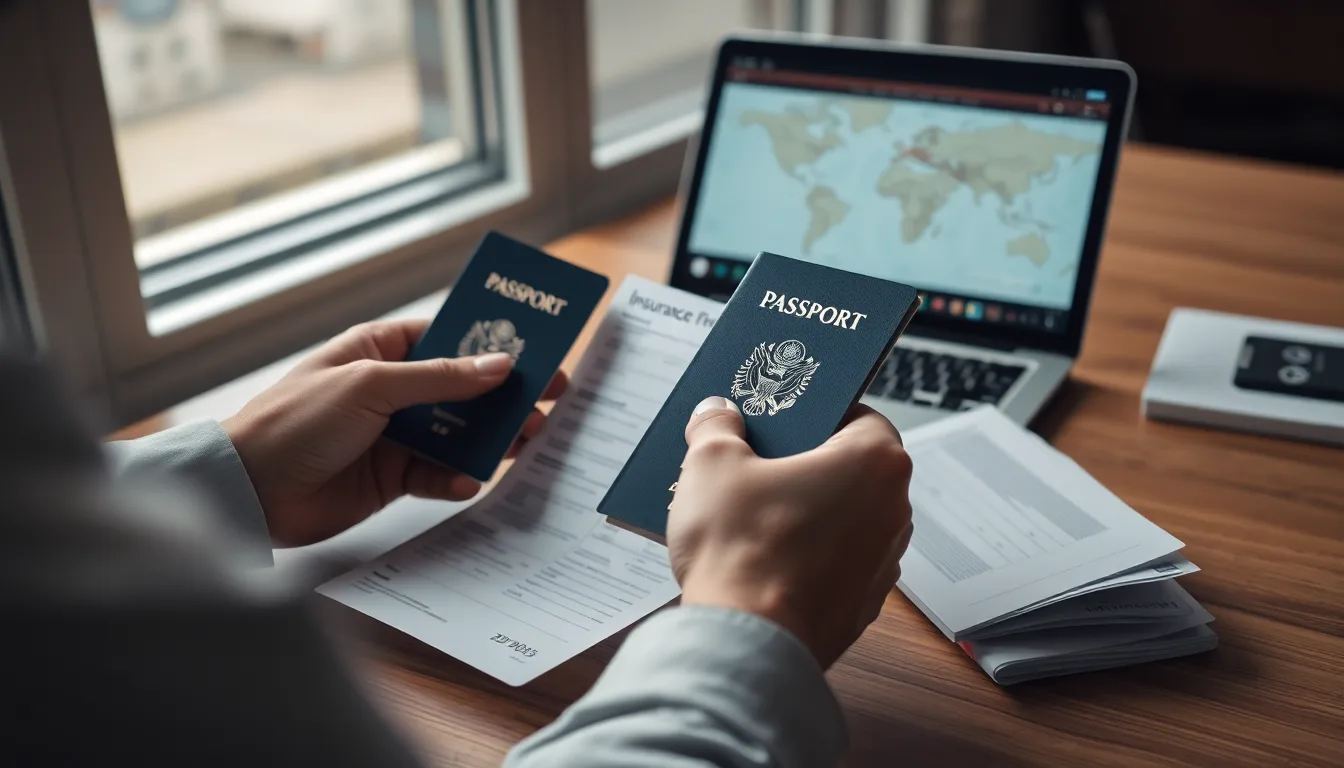
- Read your current policy's PDF in full. Yes, actually read it.
- Note which of the above clauses appear and which are missing.
- Decide whether the missing ones matter for your specific trip and destination.
- If they matter, buy a bolt-on or switch providers.
- Save the claims line, the 24-hour support number, and your policy number in three places: your phone, a physical card in your wallet, and a trusted contact at home.
- Email yourself a copy of the full policy document so you can access it even if your phone breaks.
That's it. Most of this is thirty minutes of unglamorous reading and then you forget about it for the trip. Which is exactly the right outcome.
If something does go wrong
A short list, because good instincts under stress need scaffolding:
- Call the 24-hour claims or assistance line first, before you do anything else. They will tell you what documentation you need to collect.
- Keep receipts for every expense the incident caused — taxis, new accommodation, replacement items, translated police reports.
- Get a police report if there has been any form of theft, assault, or threat. Even if you don't intend to pursue it legally, the report is almost always required for a claim.
- Email yourself a timeline of events while they are fresh. Memory blurs quickly.
- Tell one trusted person at home what's happening. Isolation compounds the problem.
One last quiet point
Buying the right policy is an act of care toward the future version of you who is having a hard time somewhere new. It's not pessimism, and it's not a sign that you expect bad things. It's the same gesture as packing a jacket you hope you won't need.
The next time you book a trip where you might match with someone, add fifteen minutes to your planning: pull up your insurance PDF, read the clauses named above, and adjust if you need to. You'll never regret it on the good nights, and you'll be grateful on the one bad one.