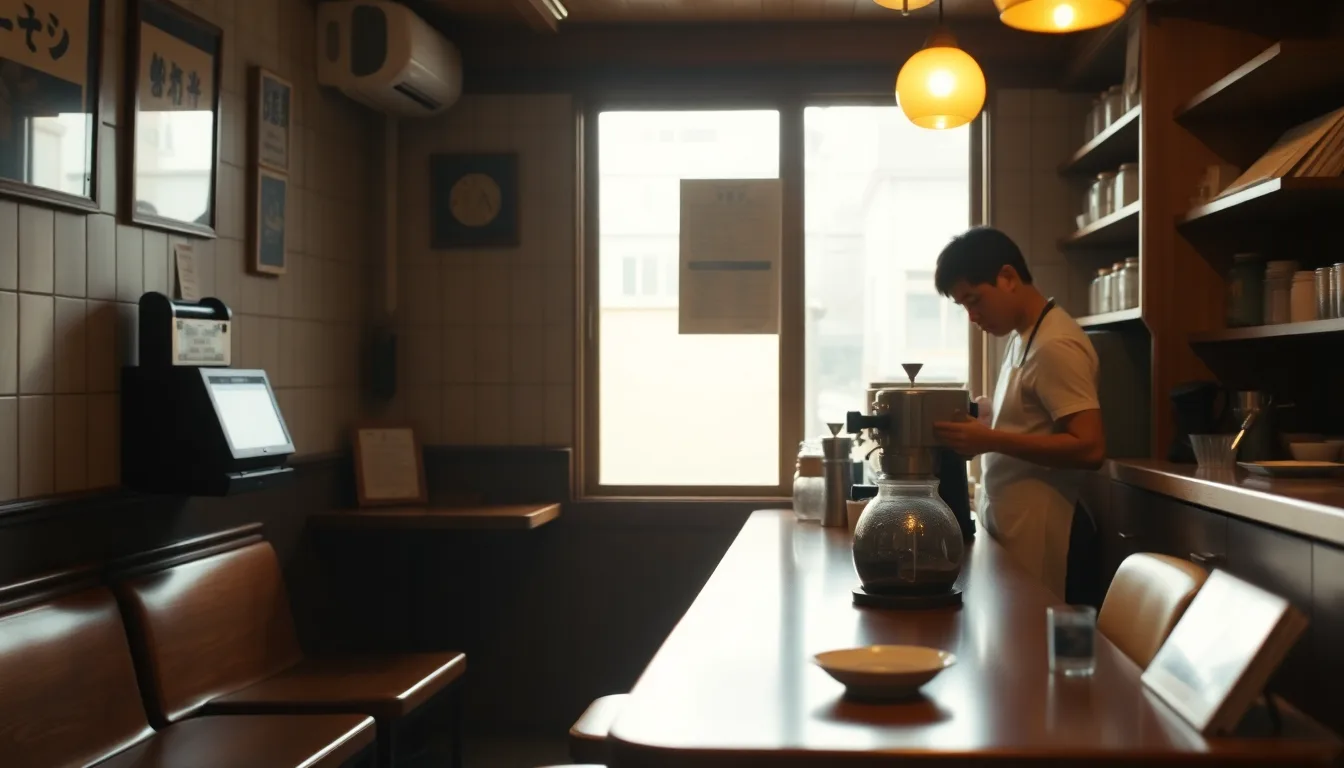
The rain is falling on Omotesando. You have ducked into a small second-floor cafe above a bookstore. There are six seats. A woman at the counter is pouring a siphon coffee with the patience of someone doing tai chi. Miles Davis plays softly. Your date walks in and shakes off a transparent umbrella. Nobody else looks up. You realize, for the first time in three days, that you can hear your own voice.
This is the Tokyo first date that works. Not a Starbucks in Shibuya. Not a loud izakaya. Not a walk in Yoyogi Park at noon on a Sunday. A small, quiet coffee shop, chosen on purpose, where the volume of the room is lower than the volume of your conversation.
Why Tokyo penalizes loud first dates
Tokyo is already sensory-heavy. Neon, crowds, announcements, train chimes, the general compression of 37 million people into a city that should hold fewer. On a first date in a loud venue, the city wins. You end up shouting, or worse, smiling at things you did not actually hear.
Japanese dating culture also rewards calm. Conversation on a first date tends to move slowly, build in layers, and leave space. A noisy place is not neutral background — it is a competitor.
The categories of quiet
Not all quiet coffee shops are quiet in the same way. Know the difference:
- Kissaten. Old-school Showa-era coffee houses. Dark wood, velvet chairs, sometimes cigarette smoke, usually instrumental jazz. The waiters are in their sixties. Conversation is naturally slow here.
- Specialty third-wave shops. Minimal, wood-and-concrete, single-origin beans, serious baristas. Quieter than they look. No music or low ambient.
- Bookshop cafes. Usually inside or above a bookstore. Semi-silent by convention. Perfect for a date that might involve actually picking up a book together.
- Hotel lobby cafes. Underrated. Clean, calm, consistent. The bar at the Aman or the lobby cafe at the Okura Tokyo are better first-date spots than 90 percent of trendy Cat Street.
By neighborhood
Shibuya area
Avoid anything on the main crossing. Head to Chatei Hatou in a side street near Shibuya station — a kissaten that has served the same siphon coffee for more than forty years, with counter seating that makes conversation intimate without being awkward. Second option: Fuglen Shibuya, Nordic, quieter than Fuglen Tomigaya on weekends.
Shimokitazawa
The whole neighborhood is built for slow days. Bear Pond Espresso is iconic but small and a bit performative. For a first date, pick Moldive or a small independent like Cafe Stay Happy. Bonus: after the coffee, the neighborhood is walkable, which solves the "what do we do next" problem.
Omotesando and Aoyama
Koffee Mameya Kakeru (not the original Mameya) has a tasting-flight format that actually creates conversation — you taste three coffees together and compare. Good for a first date that you want to feel slightly curated. Alternative: Little Darling Coffee Roasters in Minami-Aoyama, with an open courtyard on sunny days.
Ginza
Cafe de L'ambre, founded 1948, is the city's most famous kissaten and deserves the reputation. It is small and slightly formal. If your date is well-dressed and slightly nervous, this is the move. If they would be uncomfortable in a formal room, skip it.
Nakameguro
Sidewalk Stand works in the early afternoon. After 3 p.m., move inland to Onibus Coffee Nakameguro, which has a small upstairs room that stays quiet even when the ground floor is busy.
Kichijoji
If your date lives on the west side, Kichijoji is a kind first-date neighborhood. Cafe Zenon or the original Blue Sky Coffee. The whole area breathes better than central Tokyo and leaves room for a walk around Inokashira Park after.
Yanaka and Nezu
For a date who values mood over scene, head to the older northeast side. Kayaba Coffee in Yanaka sits in a restored 1938 building. It is quiet and beautiful in a way that is hard to fake. You will look smart for knowing about it.
The timing details nobody mentions
Quiet cafes in Tokyo have predictable busy windows. Avoid them. A few rules:
- Weekend late mornings are the loudest. 11:00 to 14:00 on Saturday is peak.
- Weekday late afternoons are the quietest. 14:30 to 17:00 on a Tuesday through Thursday is ideal.
- Arrive first. Showing up before your date and securing two good seats (ideally counter seats at a kissaten, or a window pair at a third-wave shop) is half the first-date battle.
The first-date etiquette that matters here
A short list of moves that read well on a Tokyo first date:
- Order in Japanese if you can. Even a basic hot coffee o kudasai is appreciated. Attempting the language is a show of effort that costs nothing.
- Do not monopolize the counter barista's time. A single question is charming. Three is rude.
- Put your phone face-down. Face-up screens in a quiet cafe are visually loud.
- Let silence happen. Japanese conversation tolerates pauses that Western conversation rushes to fill. Rushing to fill them will make you seem anxious.
- Pay at the counter on exit. Most kissaten do not bring the bill. Ask for the check with okanjo onegaishimasu. Splitting is fine now; your treat is also fine; just do not wrestle over it at the register.
What to do after
A Tokyo first coffee date works best as the start, not the whole plan. Ninety minutes is the right length. If it is going well, have a gentle second move already in mind — a nearby bookstore, a slow walk along the Meguro River, a record shop, a small gallery. The handoff from a quiet cafe to a small second activity is where Tokyo first dates often go from good to memorable.
The best first date in Tokyo does not impress. It listens. Pick the venue that lets both of you hear each other, and the conversation will carry the rest.
The small experiment
Next time you are planning a first date in Tokyo, resist the instinct to pick the most photogenic place. Pick the quietest one you can find within a ten-minute walk of a train line you both know. You will thank yourself at minute forty.
And bring a little cash. A lot of old kissaten still do not take cards.